
Why Climate Jobs Are the Most Stable Career Choice in 2026 (Despite the Headlines)
Introduction
If you’ve spent any time looking at US news headlines lately, it feels less like "progress" and more like we’ve returned to 19th-century colonizer imperialism.
The U.S. wants Greenland to access resources in the melting Arctic. There is open talk about Canada being the "51st state" to secure heavy oil. And on our own borders, the rhetoric around immigration and the unconscionable murders of Renee Good and Alex Pretti suggest a world that has decided there simply isn't enough to go around.
It’s heavy. It’s exhausting. And for a lot of people paying attention, it feels hopeless.
But this isn’t a doom piece. What we’re witnessing isn’t random chaos. It’s the visible strain of an economic system built on endless extraction, running up against real planetary limits. These headlines are signals. And once you know how to read them, they clarify something important: climate work is one of the most stabilizing forces in the world, and your skills matter more than you might think.
If you want to understand why a climate career transition matters not just for your “values,” but for global stability, peace, and resilience, start with these three stories.
Part 1: The Crumbling Status Quo
1. The Arctic is Not a Prize; It’s a Warning
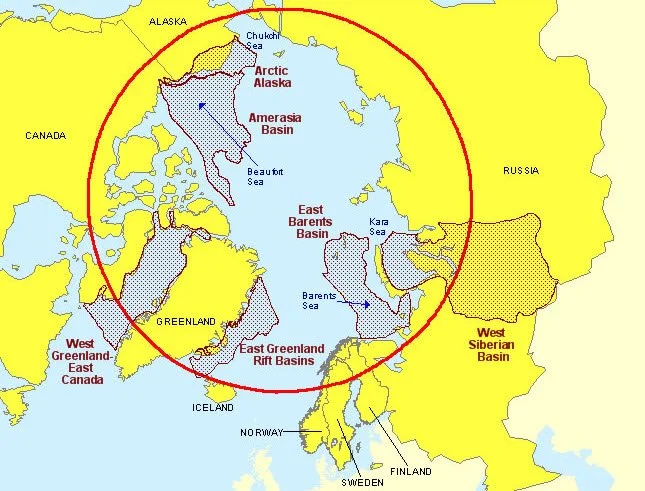
The race for Greenland isn’t about "national security." It’s about the fact that the Arctic is melting fast enough to expose massive resource reserves and opening trade routes that shouldn't exist.
The Arctic holds an estimated 13% of the world’s undiscovered oil and 30% of its undiscovered natural gas, along with a large supply of rare earth metals needed for the very "green" tech we’re trying to build (US EIA, Arctic.Review). The global powers see a "new front" for resources. But as climate change continues to disrupt weather patterns, these same powers will eventually face crop failures and water shortages that no amount of Arctic minerals can fix.
The Climate Lesson: Every time you work to scale renewables, increase energy efficiency, or reduce food waste, you are removing the incentive to fight over the "last" of anything. You are building a world that is less extractive and more regenerative and resilient.
2. The US "Heavy Oil" Addiction
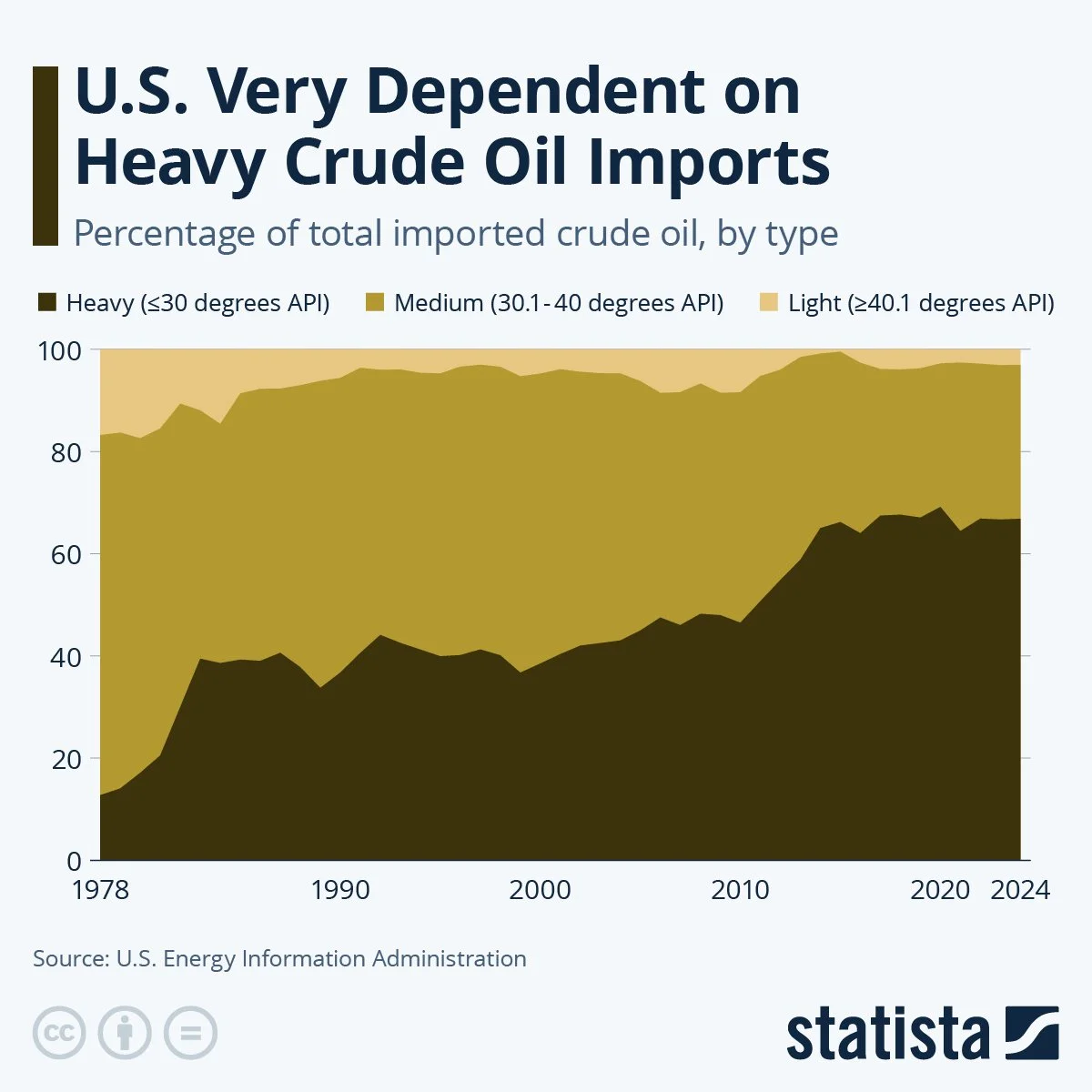
Capturing Nicholas Maduro (while violating international law and Venezuela’s sovereignty) and talking about Canada as ‘the 51st State” are about oil (duh), but also about antiquated energy infrastructure.
Currently, over 50% of U.S. refining capacity runs more efficiently with "heavy" crude oil—the kind found in Venezuela and Canada—rather than the "light" sweet crude produced by domestic fracking (PBS, AFPM). We are literally addicted to a specific, dirty grade of crude to keep our old refineries running and polluting cars driving. Because we haven't pivoted fast enough, we find ourselves eyeing other countries’ resources just to keep the lights on.
The Climate Lesson: This is why electrification and grid-scale storage aren't just "green" projects. They are community resilience imperatives. When we modernize and electrify America’s energy infrastructure, we don't just reduce emissions; we create cheaper, healthier, abundant energy without spreading “freedom” (AKA American imperialism) abroad to feed our refineries.
3. Migration Traces Back to Climate Too
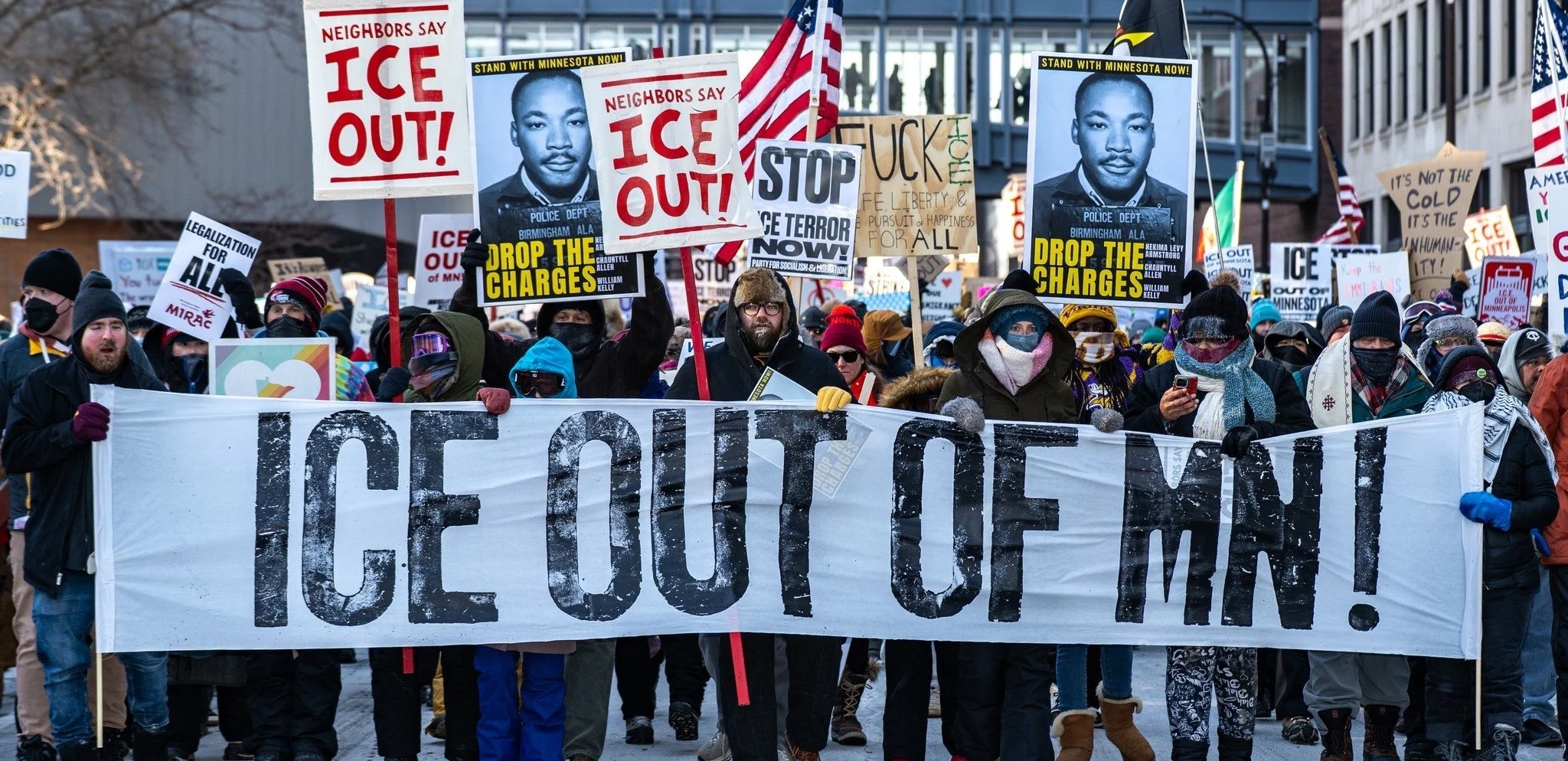
The narrative we hear about migration is often one of "them vs. us." It’s a false story of scarcity and scapegoating those that look different used to distract from the root causes: wealth inequality and a hyper-extractive model that prioritize corporate and billionaire accumulation over communities and profit over planet.
When climate change disrupts the farming cycles and ocean food chains that people rely on to survive, they move. They have to. Displacement is a rational response to an irrational climate.
It happened during the Irish Potato Famine, where a monoculture collapse drove millions to the US.
It happened during the American Dust Bowl, forcing 2.5 million people to flee the plains.
It’s happening now in the Central American Dry Corridor, where consecutive years of drought make farming impossible.
These migrations made the US and other countries the amazingly diverse, vibrant places they are today. But no one should be forced to leave their home because of an environmental collapse (primarily caused by richer countries in the global north).
The Climate Lesson: When you work on climate adaptation, regenerative agriculture, or energy independence, you are working to preserve the right to stay. You are helping build a world where the choice to move is based on opportunity and connection, not desperate survival. You are the antidote to the "scarcity" and “scapegoat the immigrants” narratives.
Part 2: The Inevitable, More Stable Alternative
So if the old system is visibly failing, what does that mean for your career? Is now the right time to make the transition, or should you wait and see? I believe climate work is one of the most impactful, rewarding, and strategic career moves you can make. Here’s why.
1. Money Talks
For a century, fossil fuels were the rational choice if you cared about profit. But that math is over.
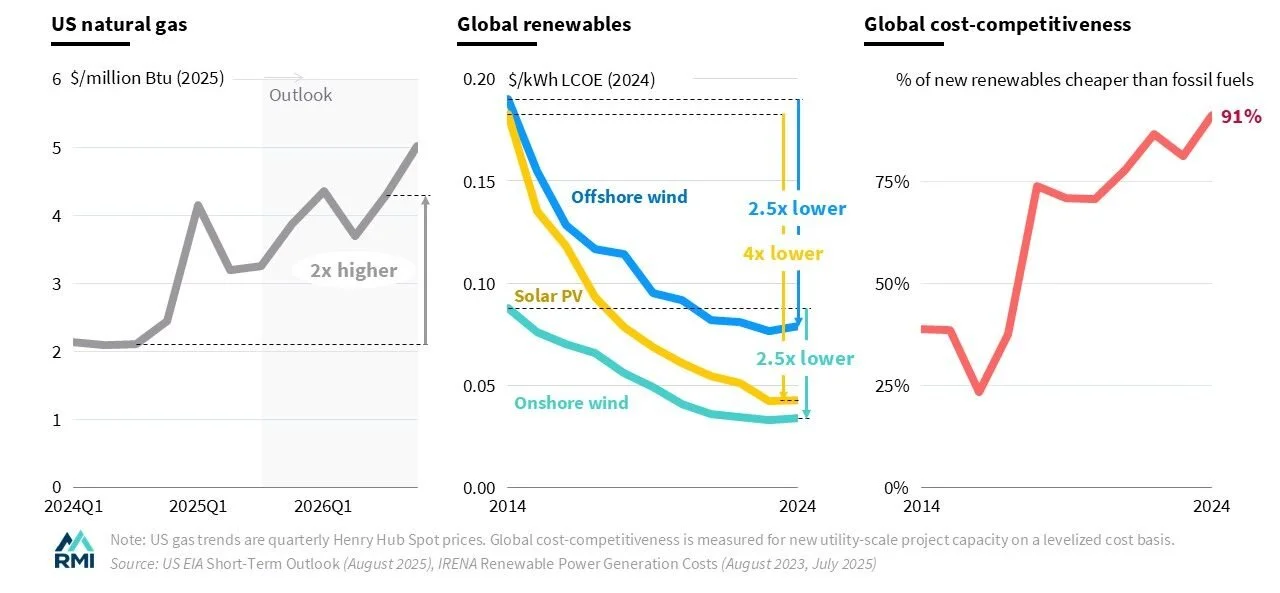
As of 2024, over 90% of new renewable energy projects were cheaper than fossil fuel alternatives (RMI). Even when you add battery storage, the cost of wind and solar has undercut coal and gas in almost every major market on Earth. Even with a despot in the White House, renewable generation is cheaper than fossil fuel alternatives even without tax credits or subsidies in the US (EIA).
When the sustainable choice delivers higher returns, the transition isn't a moral victory. It's an economic inevitability that creates stability and long-term demand for those with the right climate expertise.
The Climate Lesson: Every project you touch that makes clean energy faster, cheaper, or more reliable isn't just "doing good." You're making it even more profitable to renew, and more expensive to extract. And you're building expertise in the technology that will power every grid, every building, and every vehicle for the next century. That's not a niche skill set, it's the foundation of the entire energy economy.
2. Pollution is Becoming Expensive
The days of dumping carbon into the atmosphere and calling it "business" are ending. Not because corporations found their conscience, but because they're getting sued.
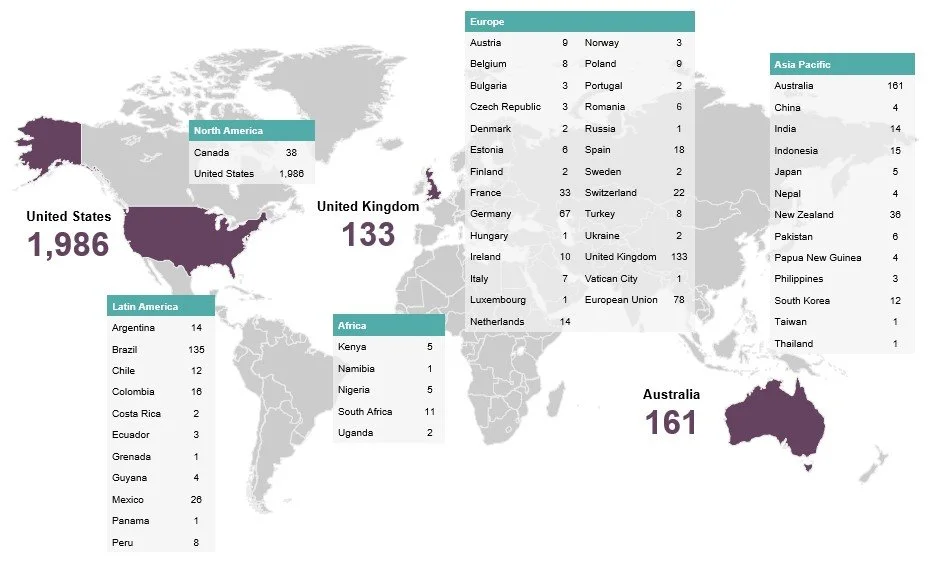
In July 2025, the International Court of Justice issued an advisory opinion confirming that governments have binding legal obligations to protect the climate system (Columbia Law, Chatham House). It's not just symbolic. As of mid 2025, there were 3,099 climate change cases filed globally to hold governments and corporations accountable for climate harm (Norton Rose Fulbright).
The Climate Lesson: If you work in climate law, policy, compliance, or corporate sustainability, you're not in a "nice-to-have" role. You're the reason companies are scrambling to get ahead of massive legal exposure. You're turning pollution into a balance sheet problem that changes decision-making at the highest levels. And unlike most legal practice areas, this one is growing as new regulation, lawsuits, and disclosure requirements create long-term demand for your expertise.
3. The Generational Fight is Real (And We're Winning)
I know what you might be thinking about this rosy future: 'I can barely afford rent.’
Most of us are overworked, underpaid, and watching older generations hoard wealth and power while the planet burns. That's not an accident, it's the same extractive system we've been talking about, just pointed at us.
But here's what's also true: despite being economically squeezed, our generation is already reshaping the world. We're leaving jobs that don't align with our values. We're refusing to prop up systems that treat us, and the planet, as disposable. We're building regenerative farms, climate tech startups, environmental nonprofits because the old systems aren't serving us anyway.
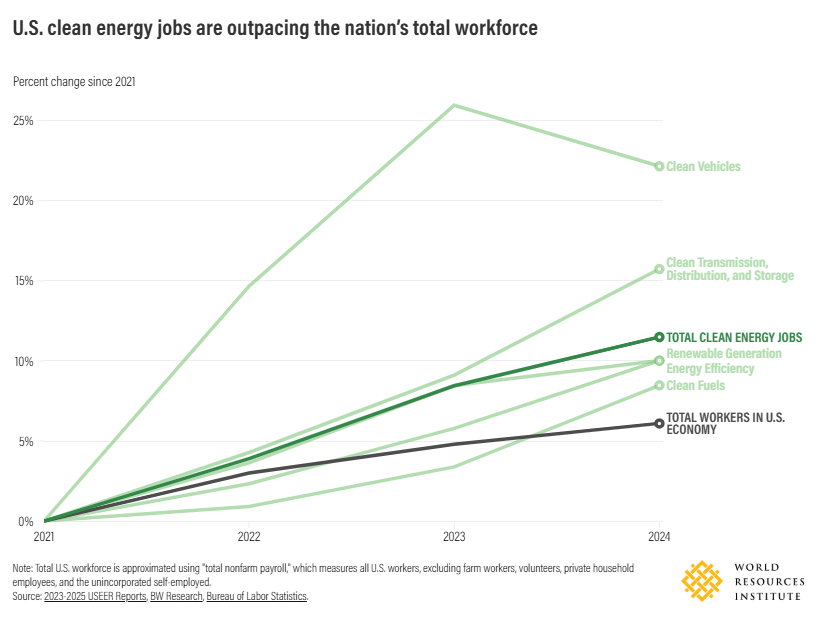
And it's working. Fossil fuel companies are struggling to attract young talent because people don't want to build their careers on a dying industry. Meanwhile, climate sectors are growing at twice the rate of the overall US employment (DOE, WRI). Workers are moving away from extraction and toward regeneration.
The Climate Lesson: You don't need to wait for power to be handed to you. Every time you choose to work on climate instead of contributing to the old extractive economy, you're withdrawing your labor from the system that's failing and investing it in the one that's rising. You're not taking a career risk, you're getting ahead of the inevitable while others cling to industries that are already obsolete.
So What Now?
I know it’s easy to feel small when the "big" actors are moving on the global stage. But the global stage is just a collection of systems. And systems are built by people.
Your specific skills, whether in engineering, program management, non-profit leadership, or something else entirely, have a place in this inevitable, ongoing transition. The question isn't whether there's room for you. It's where you'll have the most impact.
The 2026 job market is no longer about "finding a role." It's about accepting a mission: one that happens to be backed by economics, law, and an entire generation ready to build something better.
Eric
P.S. If you’re ready to move from "watching the headlines" to "changing the system," I’m here to help you make that happen. Explore coaching or resume services.